The challenge
Adversent was designed as a digital marketing training platform, bringing together courses and learning content for people developing their professional skills. The challenge was to create an experience that made a substantial amount of content feel approachable while helping users understand where to start and how to progress.
Learning platforms can easily become content libraries rather than learning experiences. Users need to be able to discover relevant courses, understand what they offer and return to their learning without having to work out where they left off.
My role was to help shape the platform experience, creating a clearer structure for the content and a user interface that supported both discovery and progression.
The aim was to turn a collection of learning content into a more structured and engaging learning experience.
Understanding the experience
The platform needed to support users at different stages of their learning journey. Someone arriving for the first time had very different needs from someone returning to continue a course they had already started.
I focused on understanding the key moments within that journey and how the experience could support each of them. This meant considering how users discovered courses, chose what to learn, progressed through content and returned to continue their learning.
The platform needed to make it easy for users to understand the breadth of available content and find courses relevant to their interests and development goals. Clear hierarchy and content categorisation helped make the choice feel manageable.
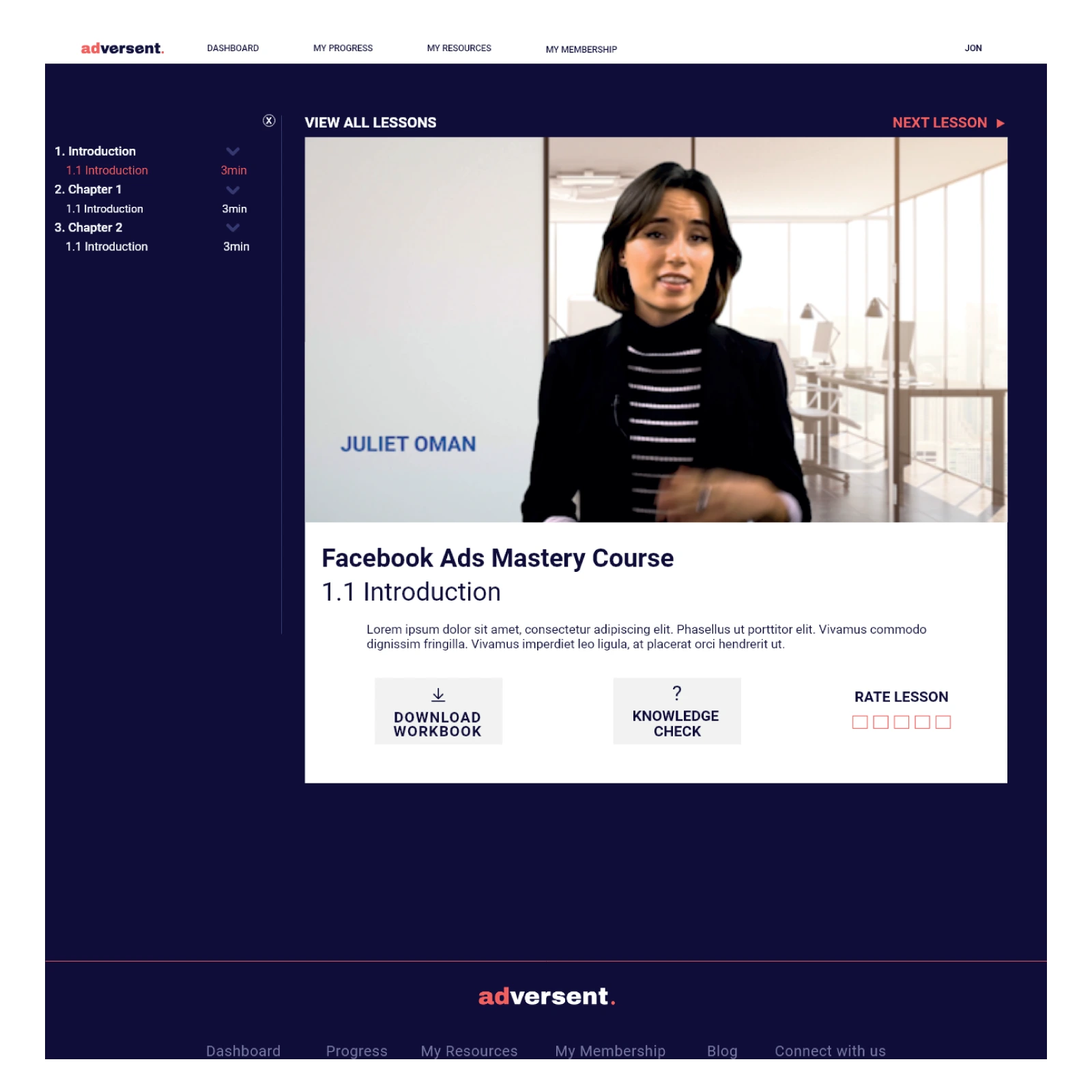
Once enrolled, the experience needed to give learners a clear sense of where they were within a course and what came next. Progress became an important part of the interface rather than something hidden away in the background.
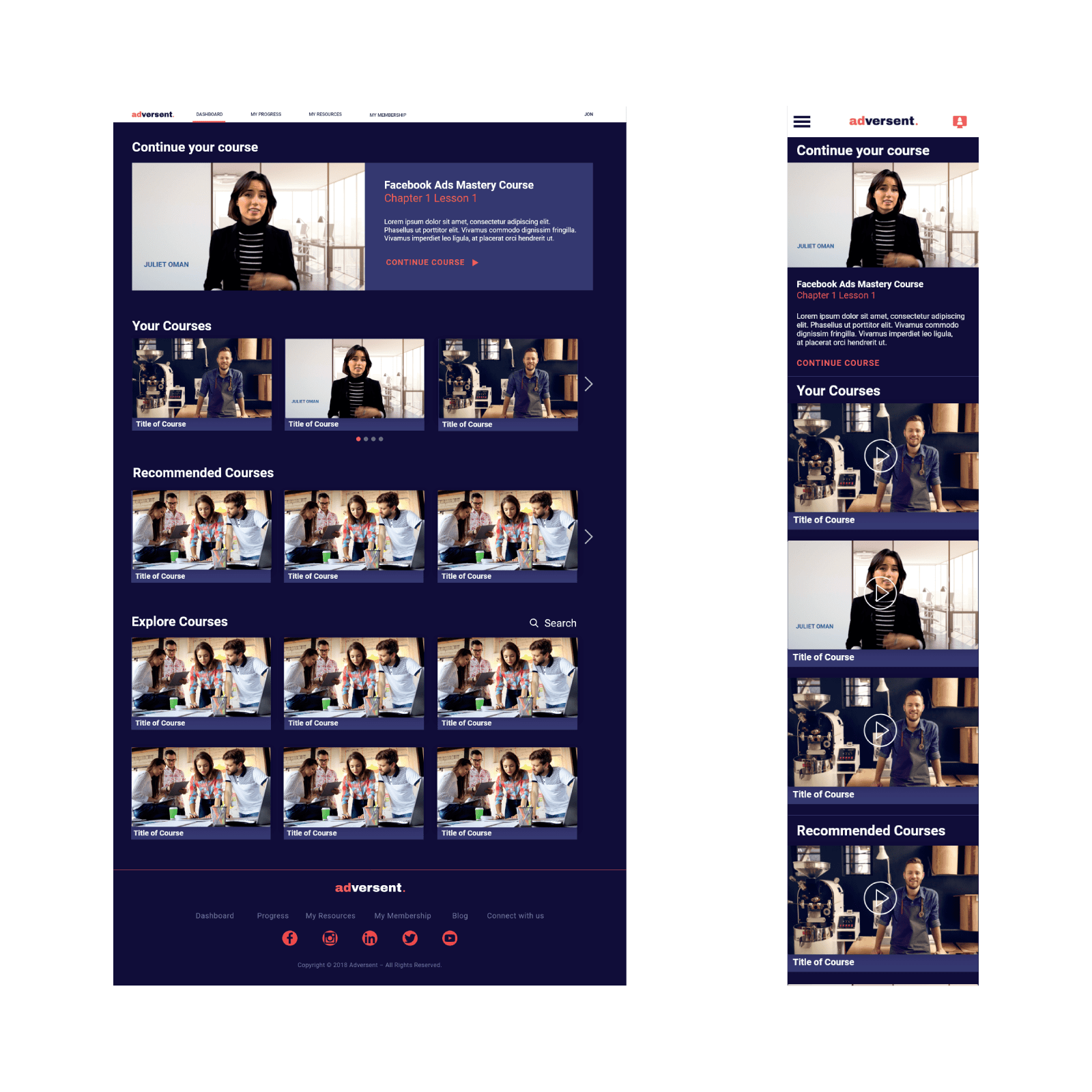
Returning to a learning platform should not mean having to search for where you left off. The dashboard was designed to surface active learning and make continuing a course the most immediate and straightforward action.
The experience was designed around the key stages of how users discover, engage with and return to learning.
Discover
Explore the available learning content.
Choose
Find courses relevant to your needs.
Learn
Focus on the content without distraction.
Progress
Understand where you are and what comes next.
Return
Continue without having to find your place again.
The design solution
The resulting experience was built around making the learning journey clearer and more immediate. Rather than presenting users with a static library of content, the interface was designed to help them understand what was available, what they were currently working on and where to go next.
I developed a flexible dashboard and interface system that could support different types of learning content while maintaining a consistent experience across the platform.
- A clear dashboard structure designed to surface the most relevant information and learning activity.
- Course cards and content modules that created a consistent way to browse and discover learning content.
- Visible progress indicators that helped users understand their position within a course and encouraged continued learning.
- A simplified path back into active courses, reducing the effort required for returning users to continue where they had left off.
- A flexible visual system that could accommodate new courses, content types and future platform features.
The interface needed to feel professional and credible while remaining engaging enough to support an ongoing learning experience. Careful attention was given to hierarchy, typography and the way information was grouped, helping users focus on the task at hand without feeling overwhelmed by the amount of available content.
Designing for consistency and scale
Alongside the individual user journeys, I needed to create a visual system that could work across the wider platform. Adversent contained different types of content and interactions, so consistency was important in helping users quickly understand how the interface worked.
I developed a set of reusable design patterns and components covering navigation, course content, cards, progress states and calls to action. This created a more coherent experience while giving the platform a flexible foundation for future development.
Typography, colour, spacing and component behaviour were brought together into a clear visual language that could be applied consistently across different areas of the platform.
Repeated elements were designed as reusable patterns, helping create familiarity for users while making the experience easier to extend as new courses and features were introduced.
The experience was designed to work across desktop and mobile, recognising that users might access learning content in different contexts and on different devices.
The outcome
The project resulted in a more structured and considered digital learning experience, designed around the different stages of a user's journey. The platform gave learners clearer ways to discover content, understand their progress and return to continue their learning.
The work also established a flexible interface system that could support the growth of the platform, helping new content and features fit into a consistent experience rather than being designed as isolated additions.
For me, Adversent was an important example of applying UX thinking beyond individual screens. The challenge was not simply to make the platform look engaging, but to consider how information, interaction and visual design could work together to support a longer-term user journey.
Good learning experiences need more than good content. They need to give people a clear reason to start, continue and come back.